
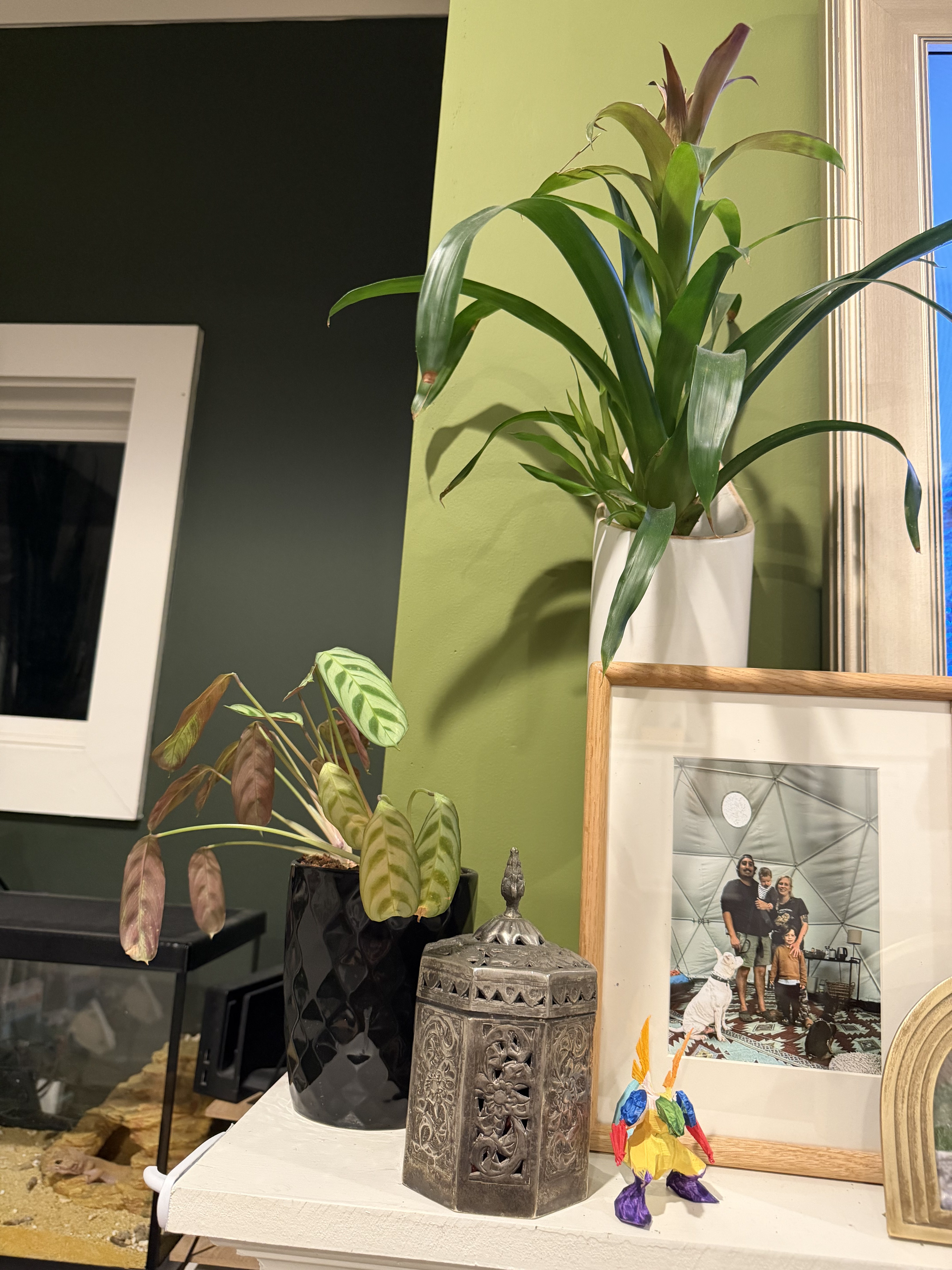
Choosing pet-safe plants
Many plant owners worry about toxicity when choosing houseplants, especially in homes with pets or small children. The truth is that many plants labeled 'toxic' cause mild irritation rather than serious harm, but if you prefer to choose non-toxic plants there are still many good options. Here are three reliable pet-safe plants.
Spider Plant
Spider plants are one of the easiest pet-safe houseplants available. They grow well in bright indirect light and produce small offshoots that can easily be propagated into new plants. They are also extremely forgiving and adapt well to different environments.
Hoya (Wax Plant)
Hoyas are beautiful trailing plants that are both pet-safe and relatively easy to care for. They prefer bright indirect light and slightly drier soil between watering. They grow slowly but can live for many years.
Calathea / Prayer Plants
Calatheas are known for their beautiful patterned leaves and their unique movement — the leaves raise and lower slightly between day and night. They prefer medium indirect light and slightly moist soil.
A note on the full guide
The full guide also discusses plant toxicity, placement strategies, and how to choose plants that work safely for your household.