
Soil & Season
Summer 2026
Vol. 1, No. 2 · June 2026
Late spring is one last sprint before the heat takes over. There's a window — a few good weeks — to cut back what's finished, chop what's gotten leggy, and tie up what's about to flop. Do that work now and your garden will reward you all summer. Then once the real heat arrives, your job changes: maintain, watch, water smart, and sit down. Fall will be busy. Summer is yours.
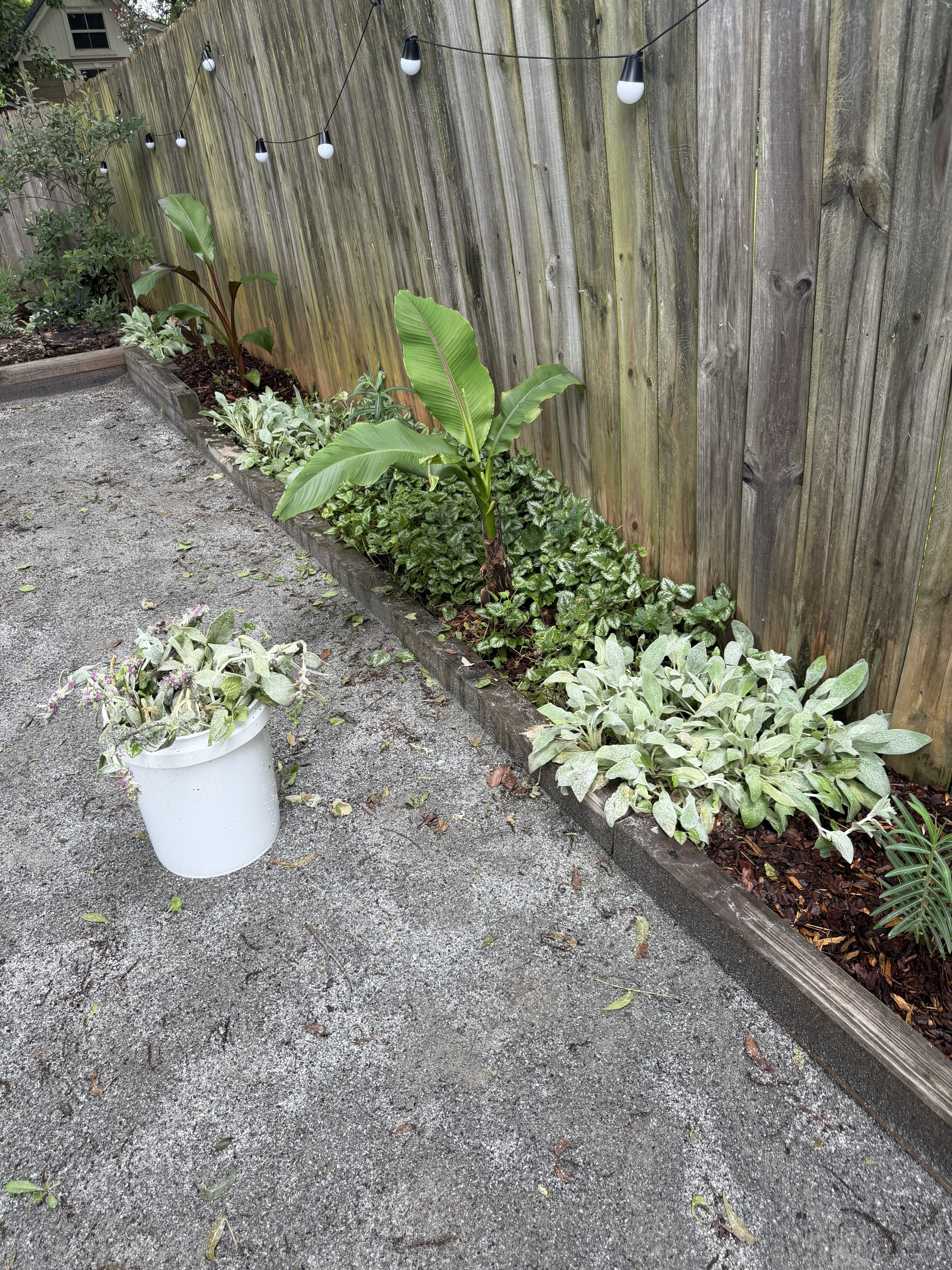
Cut back your spring bloomers — lamb's ear, columbine, hellebore, and coral bells are done. Remove spent flower stalks at the base and tidy up dead or yellowing foliage.
Don't cut the whole plant — just the spent blooms and damaged leaves. Most will push fresh foliage and some will rebloom in fall.
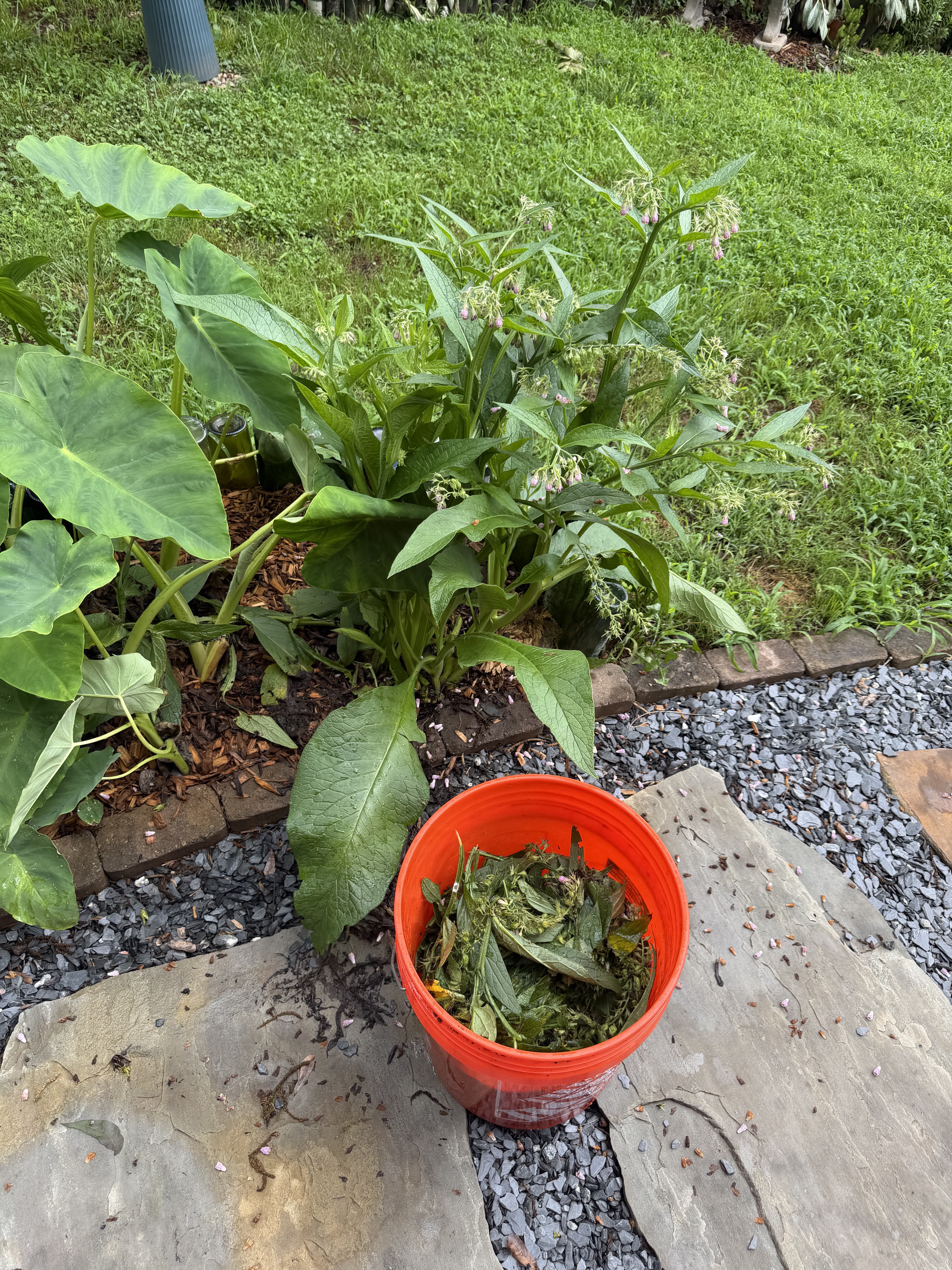
Give the Chelsea Chop to anything leggy — lemon balm, comfrey, garden rue, and anything tall and overgrown that you want to bush out. Cut by about a third to half.
This technique delays bloom slightly but produces stronger, fuller plants with more flowers. Don't be shy — they always come back better.
Prune shrubs, vines, and plants taking over — forsythia, aggressive vines, anything spilling into paths or crowding neighbors. If you don't love how it's growing, now is the time to correct it.
Avoid heavy pruning on anything that blooms on old wood — like most hydrangeas — or you'll cut off next year's flowers.
Tie up before things flop — stake and loosely tie spirea, milkweed, lilies, and dahlias before they lean or topple. Once they fall it's hard to recover the shape.
Use soft jute or garden twine. Loosely figure-eight the stem to the stake — snug enough to support, loose enough to move.
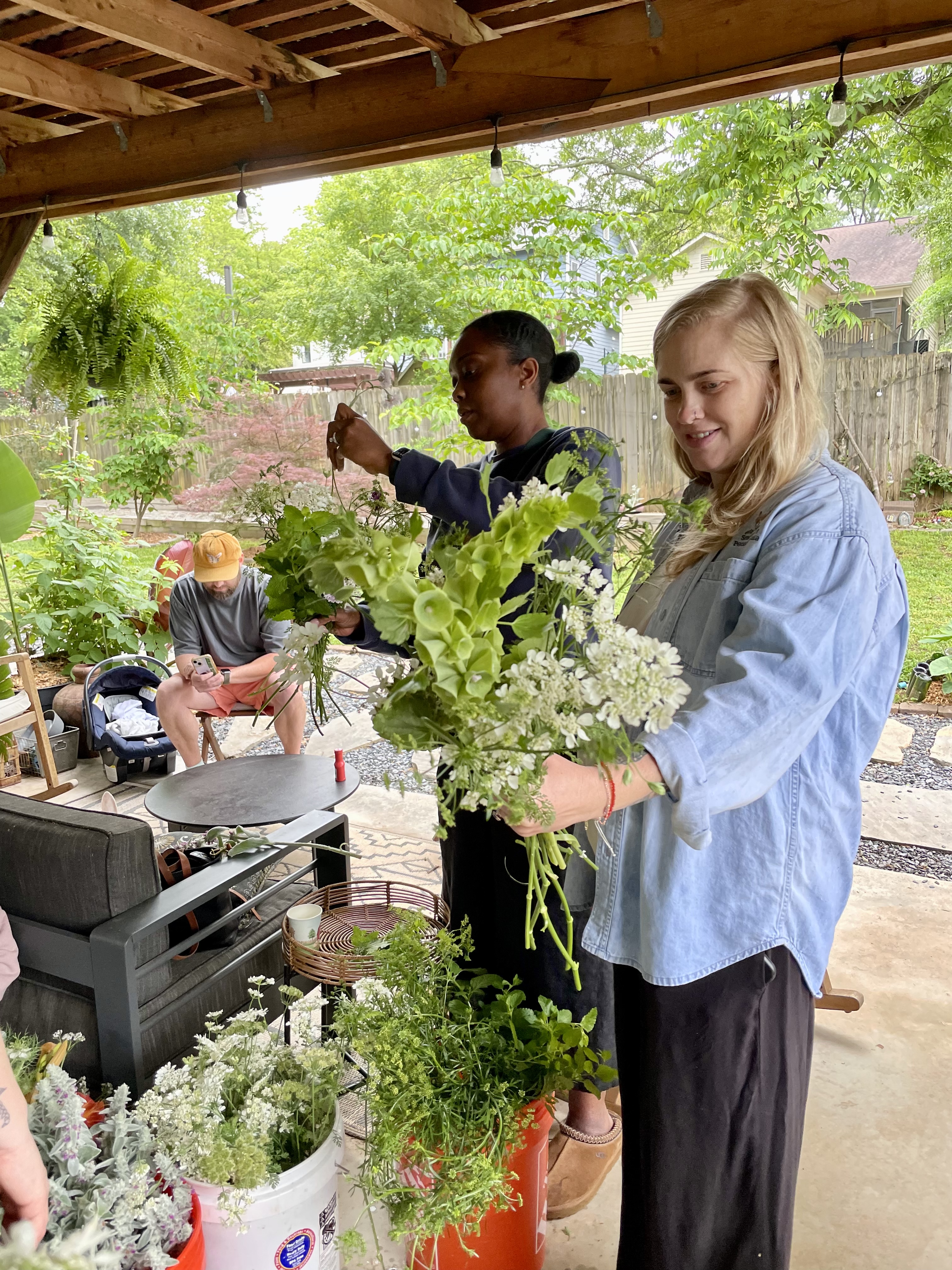
Cut flower beds: save seeds from finishing spring blooms — orlaya, poppies, bachelor buttons. Then clear those beds, top-dress with fresh compost, and direct sow zinnias, marigolds, cosmos, and sunflowers.
Water new seedlings daily until they sprout, then slowly taper — every other day, then twice a week, skipping rainy days. They're tougher than they look once they're up.
If you haven't yet, tuck nasturtiums and marigolds in among your vegetable beds. They deter pests, attract pollinators, and fill every gap. Both can still be direct sown — they germinate fast in warm soil.
Get sweet potatoes in the ground. They need a long hot season. Plant slips 12–18 inches apart, give them room to spread. Harvest in late September or October when the vines start to yellow.
Mulch if you haven't — it's not too late. Three to six inches now saves enormous amounts of watering, suppresses weeds, and keeps roots cool through the worst of the heat.
Wood chips, straw, or shredded leaves all work. Leave a gap around plant crowns so mulch isn't piled against stems.
Prune your basil to keep it from bolting. Once it bolts the leaves turn bitter and production slows. Pinch or cut back the flowering tips every week or two.
Keep tomatoes and tall veggies staked, tied, and supported as they grow. Remove any leaves touching the soil to prevent disease splash-up, and prune for airflow. Don't be afraid to lose a little fruit to protect the plant.
Walk your garden every day to every few days to look out for disease, things that need to be staked, or pests. Squash vine borers, cucumber beetles, and hornworms all show up now — none are a disaster if you catch them early.
Hornworms: pick off by hand. Squash vine borers: cut out infected stem sections and don't compost them. Cucumber beetles: nasturtiums and marigolds as companion plants help deter them. For diseases like early blight or powdery mildew — cut out infected leaves immediately and improve airflow.
If a plant looks diseased and dying, cut it out. Focus your energy on your healthy plants, or start making plans for what you'll put there next season.
Look up specific varieties of fruit and veggies and note when to harvest. Every variety is different — pull up the seed packet or search online. Check daily as you get close; a day or two makes a huge difference in flavor.
Harvest your garlic — pull one head to test it. If it's a good size, pull more before the stems flop over. If it's smaller than you'd like, you can still eat it — just use it fresh.
You can plant in summer, though I don't recommend it as a first choice. If you do, pick overcast or rainy days, set the plant in the hole, fill with water until it's swimming, then fill with soil. Keep new plants watered extra for the first few weeks.
I started my entire heirloom rose garden in late June. Water and timing are everything.
Deadhead regularly to keep things blooming — coneflowers, zinnias, black-eyed Susans, and most annuals produce more flowers when you cut spent blooms back to a leaf node. Keep weeding too; if you mulched well it should be minimal.
Don't water wilting plants in the afternoon heat. Check them again at 8pm or first thing in the morning — if they've perked back up, they were just protecting themselves from the sun. Water in the morning or evening when it hasn't rained in 4–7 days.
Wet foliage in the heat of the day invites disease. Morning watering is always best.
Now is the time to sit back and enjoy what you built. Smell the flowers, appreciate the beauty you created — you earned it.
Take notes on gaps, areas lacking blooms, and ideas for fall. Fall is a busy planting season and what you notice now is exactly what you'll want to remember then.
Move plants away from west-facing windows that get harsh afternoon sun — summer light is stronger than spring and can scorch leaves that handled it fine a month ago.
Water more frequently as indoor temps rise and growth speeds up. Pots dry out much faster in summer — check the soil more often than you think you need to.
Keep feeding with compost tea or diluted organic fertilizer once a month through September. This is peak growing season.
Less is more — once a month maximum. Skip it if the plant is stressed, recently repotted, or not actively growing.
Tropical plants love summer humidity. Group them together, set pots on pebble trays with water, or add a humidifier to raise the moisture around them.
Top off your pots with fresh soil and mix in systemic houseplant granulars to prevent pests. Proactively spray leaves with insecticidal soap. Add sticky fly traps to monitor for or catch fungus gnats.
During watering, check the undersides of leaves for pests — especially spider mites, which thrive in hot and dry conditions. Fine webbing or stippled, dull-looking leaves are your signal.
To treat: spray with insecticidal soap at first sign and isolate the plant from others while treating.
This is the perfect time to propagate. Look up your variety and how to propagate from leaf, stem, or root separation. Water propagation works best for sprouting roots on fresh cuttings.
This is also the right time to pot up — but only go one pot size up to prevent root rot. If you want to keep the plant in the same pot, cut off the bottom quarter of roots (especially if rootbound), clean the pot, and return the plant with fresh soil.
Right now in the Dogwood City: coneflowers and black-eyed Susans are at peak, dahlias are just opening their first blooms, and zinnias and cosmos are covering every gap you left in spring. The coral honeysuckle that lit up fences for hummingbirds is giving way to passionflower vine — watch for gulf fritillary butterflies laying eggs on it. If you planted butterfly milkweed this spring, look closely. Monarchs are moving through, and the milkweed is exactly what they're looking for. Summer in Atlanta hits hard and fast. This is what you planted for.
Native Spotlight: Purple Coneflower
Echinacea purpurea · Georgia Native · Zone 8a · Full sun to part shade
One of the most reliable and hardworking native perennials you can grow in Atlanta. It blooms June through September — the exact stretch when many gardens run low on flowers — and handles Georgia heat and drought without complaint once established. Native bees go wild for the pollen; goldfinches and other songbirds will strip the seed heads through fall and winter if you leave them standing. First year it blooms modestly. By year three it's a statement plant self-seeding gently around the bed. Cut some for vases, leave others for the birds. Grows 2–4 feet, clumps up reliably, and rarely needs dividing. Get it from Beech Hollow Farms or the Wylde Center — not a big-box store where you risk a patented hybrid that doesn't support wildlife the same way.
Jun–Aug
Sat
W. Ponce de Leon Ave, Decatur · Every Saturday 9am–1pm · Local produce, plants, and vendors all summer
Now
Open
393 N. Clarendon Ave, Scottdale · Thu–Sun 10am–4pm · All natives, no pesticides, locally grown
All
Summer
1345 Piedmont Ave NE · Summer programming and gardens at peak bloom · Check for special events
Ongoing
Monthly
435 Oakview Rd, Decatur · Check the website for summer schedule and upcoming workshops
Key terms from this edition — for future reference and new gardeners getting started.
The Chelsea Chop
Cutting herbaceous perennials back by a third to a half in late spring or early summer to encourage bushier, more compact regrowth. Named after the Chelsea Flower Show in London. Results in slightly delayed but stronger, fuller bloom.
Deadheading
Removing spent (dead) flower heads by cutting back to a leaf node or lateral bud. Encourages continuous blooming by preventing the plant from putting energy into seed production.
Sucker
In tomatoes, the new shoot that sprouts from the 'V' junction between the main stem and a branch. Removing suckers on indeterminate varieties keeps the plant focused on fruit production rather than excess foliage.
Indeterminate tomato
A tomato variety that grows and produces fruit continuously throughout the season until frost — as opposed to determinate varieties that ripen all at once and stop. Most heirloom tomatoes are indeterminate.
Squash vine borer
A moth larva that tunnels into the base of squash, zucchini, and pumpkin vines, causing sudden wilting. Look for a sawdust-like frass at the stem base. Cut out affected sections immediately and do not compost them.
Staking
Supporting a plant with a stake, cage, or trellis to keep it upright as it grows tall. Essential for tomatoes, dahlias, tall lilies, and other top-heavy plants. Always stake before the plant needs it — not after it has already fallen.
From GardenSeid
Want more hands-on help?
The newsletter is a starting point. If you want someone to walk through your specific garden with you, these are ways we can work together.
Garden Services
Consultations, seasonal installations, and ongoing care for Atlanta-area gardens.
See servicesFree Intro Call
Not sure where to start? Book a free 20-minute call and we’ll talk through your garden goals.
Book a callPlant Guides
Free guides on houseplant care, native plants, and building a regenerative garden.
Browse guidesYou received this because you subscribed to Soil & Season. Unsubscribe